

My osteopathic approach
My aim is not simply to chase a symptom, but to understand the person experiencing it.
My approach to osteopathy has been shaped by both professional training and personal experience.
Growing up around serious illness taught me how vulnerable it can feel to need help and not feel fully heard. That experience shaped something fundamental in the way I practice today: before trying to help someone, I need to listen.
When you come to see me, I look beyond the place where you feel pain or discomfort. I consider how you move, where your body holds tension, how different areas relate to one another, and how your health history and life experiences may be influencing what I find.
My assessment is grounded in anatomy, physiology and traditional osteopathic principles. Through observation, movement and touch, I look for areas that may be moving less freely or adapting around previous strain.
Treatment is always individual. I may work very gently or use more structural techniques, depending on what I find and what is appropriate for you. I do not believe treatment needs to be forceful to be effective.
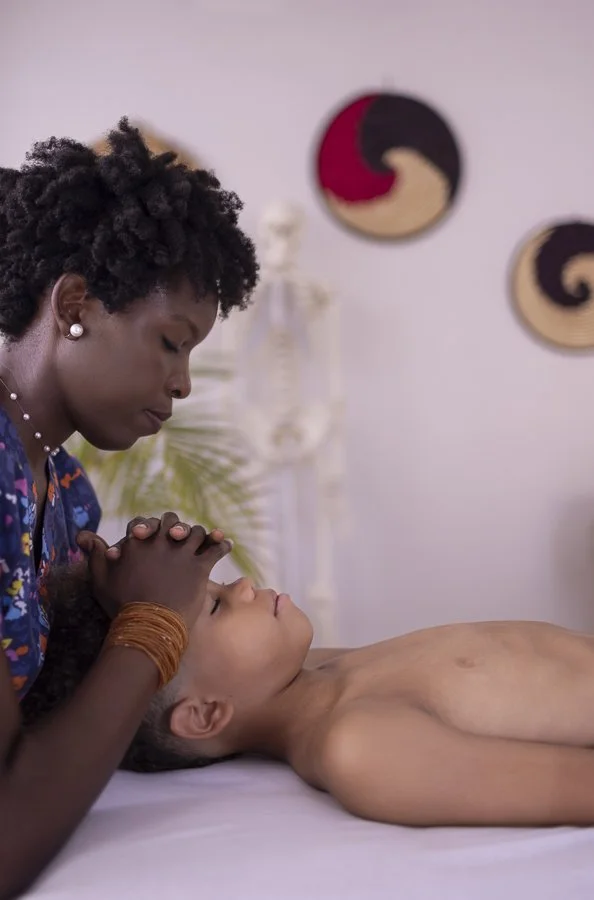
A young patient with migraine treated via cranial and biodynamic techniques.